 RigMining
Profitability
What Drives Bitcoin Mining Profitability? Hashprice, Difficulty and Power Cost
Mining profit depends on hashprice, network difficulty, the Bitcoin price and your power cost. See how they fit together with a simple worked example.
Revenue first: hashprice
Miners need a simple way to say what their work is worth. The standard measure is hashprice: the expected income from one terahash per second of hashrate over one day, usually written as dollars per TH/s per day. The figure moves daily, and you can follow it on the Luxor Hashrate Index.
Hashprice combines three things that change over time:
- The Bitcoin price. Between difficulty changes, hashprice moves with the price.
- Network difficulty. When more machines compete, each one wins a smaller share.
- Transaction fees. These add to the block subsidy and vary with demand.
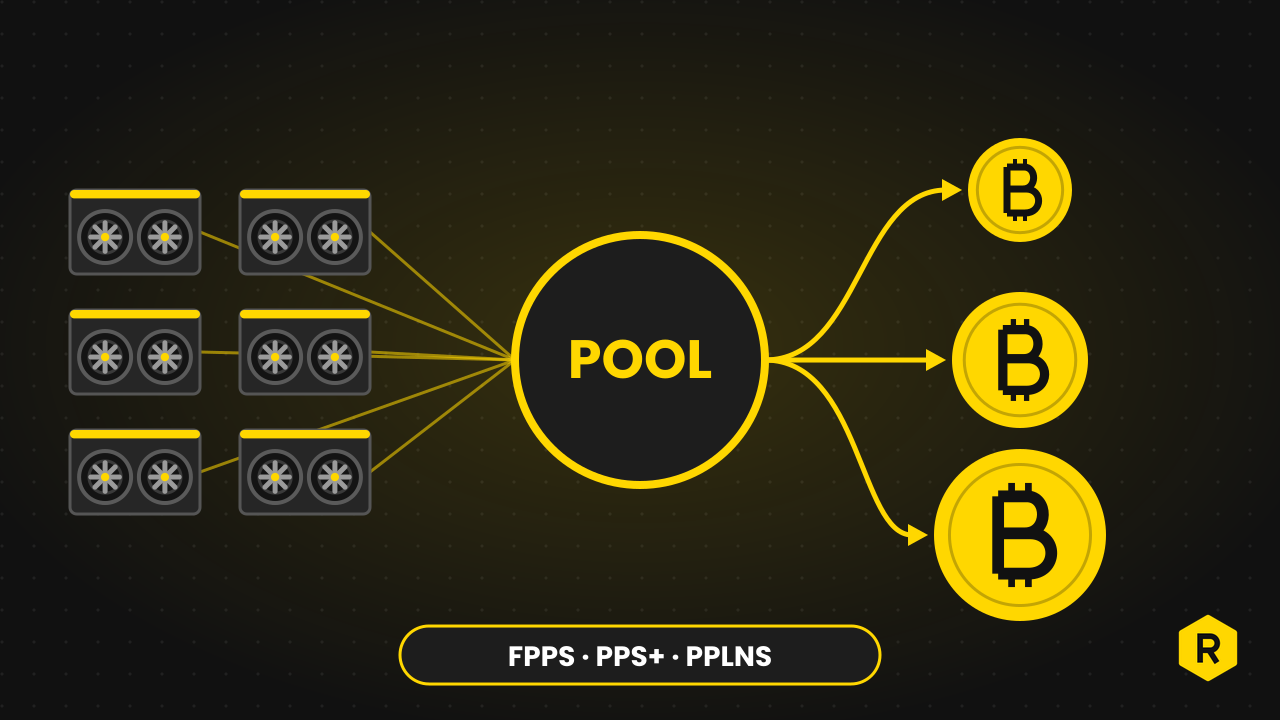
Hashprice is gross revenue, not profit. It also is not the same as your pool payout, which depends on the pool’s rules, its fee, your uptime and rejected work.
Costs next: what you pay to earn
The main costs are:
- Electricity, or the all-in hosting rate if a host supplies the power.
- Pool fee, usually a percentage of revenue.
- Hosting or management fees, if any.
- The machine, which you pay for once but should recover over time.
A worked example
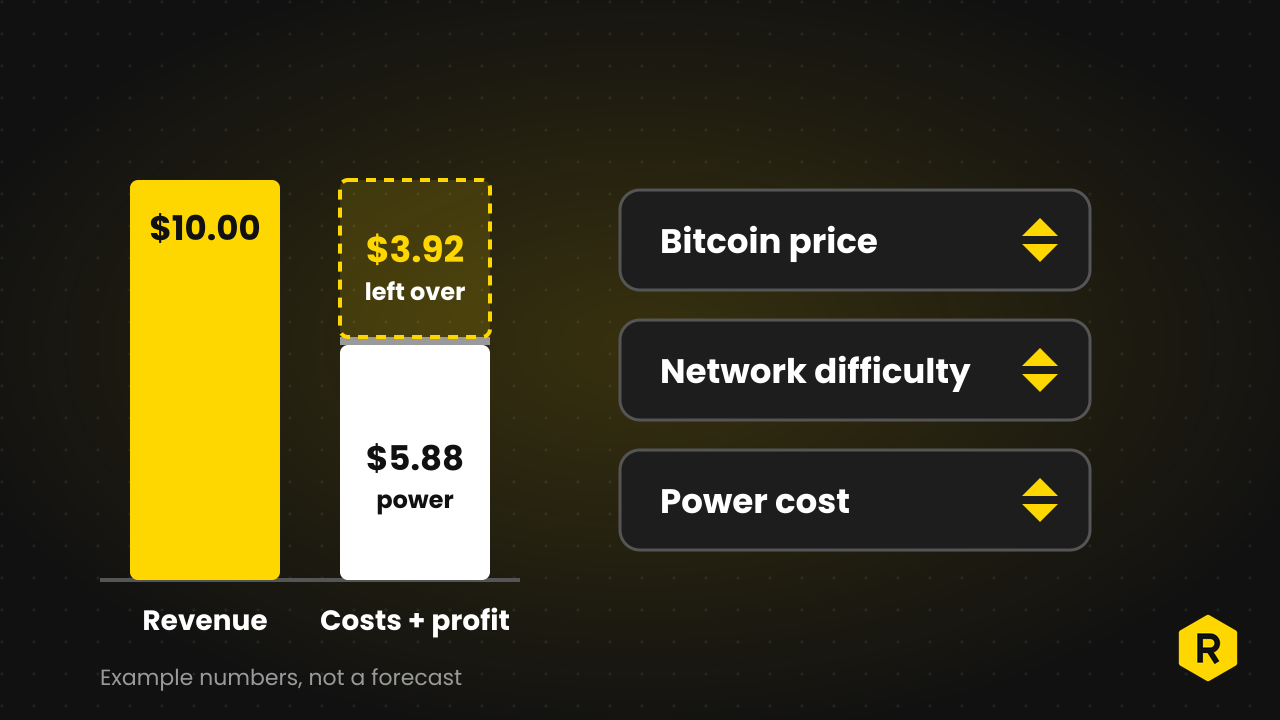
The numbers below are made up to show the arithmetic. They are not a forecast, and real hashprice and power prices differ.
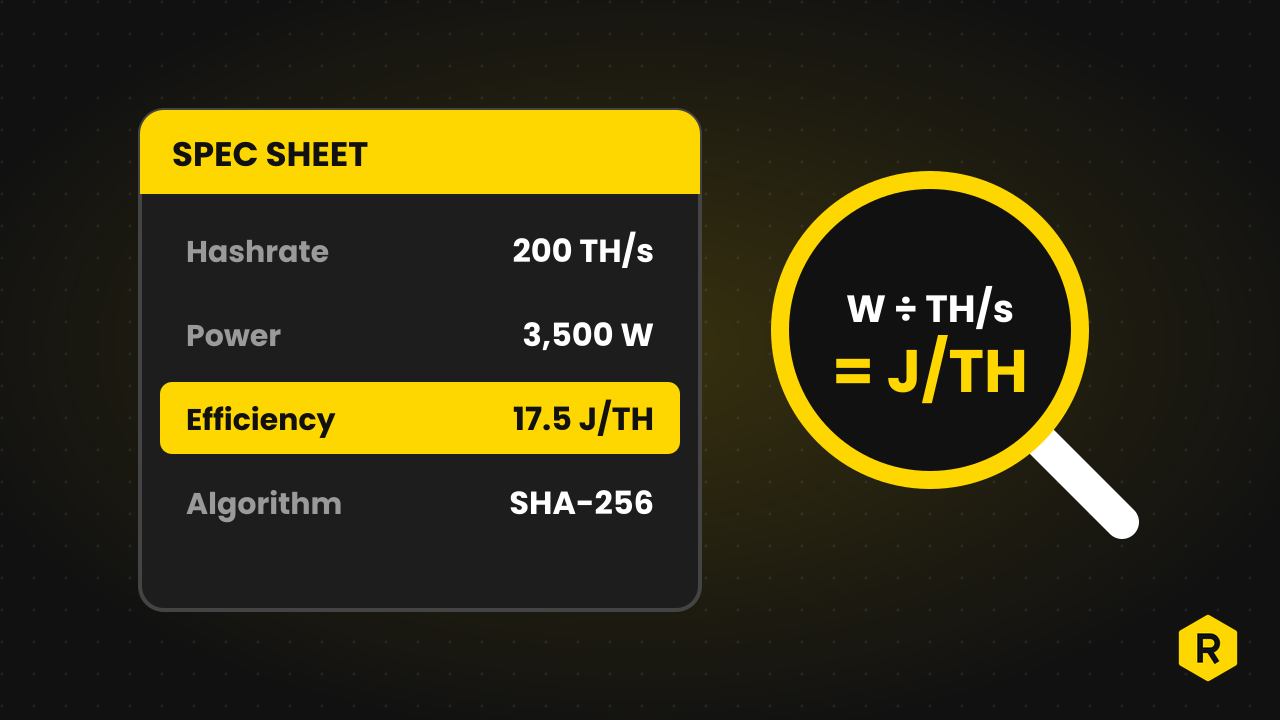
- Machine: 200 TH/s, drawing 3,500 W.
- Example hashprice: $0.05 per TH/s per day.
- Example power price: $0.07 per kWh.
- Example pool fee: 2% of revenue.
| Step | Calculation | Result |
|---|---|---|
| Gross revenue | 200 × $0.05 | $10.00 a day |
| Pool fee | 2% of $10.00 | $0.20 a day |
| Power | 3.5 kW × 24 h × $0.07 | $5.88 a day |
| Left over | $10.00 − $0.20 − $5.88 | $3.92 a day |
That $3.92 is before the cost of the machine and any other fees. To see how long a machine takes to pay for itself, divide its price by the daily amount left over. Then remember that the daily amount will not stay the same.
Why the number keeps changing
- If the Bitcoin price rises and difficulty has not caught up, revenue per machine rises.
- When difficulty rises faster than revenue, the revenue per terahash falls.
- Every halving cuts the subsidy in half. See the halving explained.
- Your power price may be fixed or variable, depending on your contract.
A stress test before you buy
Do not rely on one calculation. Run your numbers at least three ways:
- Today’s figures.
- A lower Bitcoin price than today’s.
- A higher difficulty, which means lower revenue per terahash.
If the machine still pays its power bill and pays back at a pace you accept in the cautious cases, you are making a decision on solid ground. If it only works in the best case, that is a sign to wait or to choose a more efficient machine.
Use a calculator, with your own inputs
OneMiners’ Bitcoin mining calculator asks for four inputs: your machine’s hashrate, its power use in watts, your electricity price and the pool fee. It takes the current Bitcoin price from exchanges. There is also a calculator for each coin the site lists.
Any calculator gives an estimate for the moment you run it, not a promise. Our tutorial on using the Bitcoin mining calculator shows each field, and how to read a spec sheet explains where to find your machine’s numbers.
Sources and further reading
Written by the OneMiners team. We sell and host mining machines, so this article links to our own pages where they are relevant, and the sources above are independent. It explains how things work and is not financial advice. Mining carries risk, and prices, rates and features change, so check oneminers.com for current details.