 RigMining
Trust and safety
Crypto Mining Scam Red Flags and How to Protect Yourself
Guaranteed returns, pressure to pay fast and fake dashboards: the warning signs of mining scams, based on SEC, CFTC and FTC guidance, and what to do.
Mining is a real business, and a favourite for scammers
Real mining companies exist, and real machines earn real bitcoin. Scammers copy the language of mining because it sounds technical and sounds profitable. US regulators have warned that fraudsters tout “mining” farms and promise high, guaranteed returns with little or no risk.
The good news is that the warning signs are consistent. Learn them and you can spot most schemes.
A recent example
In July 2026 the US Securities and Exchange Commission charged a Florida man and his company, Mining Automatic. The SEC alleges they raised about $22 million from more than 380 investors by promising guaranteed monthly returns from crypto mining, and that only around 13% of the money went on mining-related expenses. These are the SEC’s allegations, and we mention the case only to show the pattern. It has nothing to do with OneMiners.
The red flags
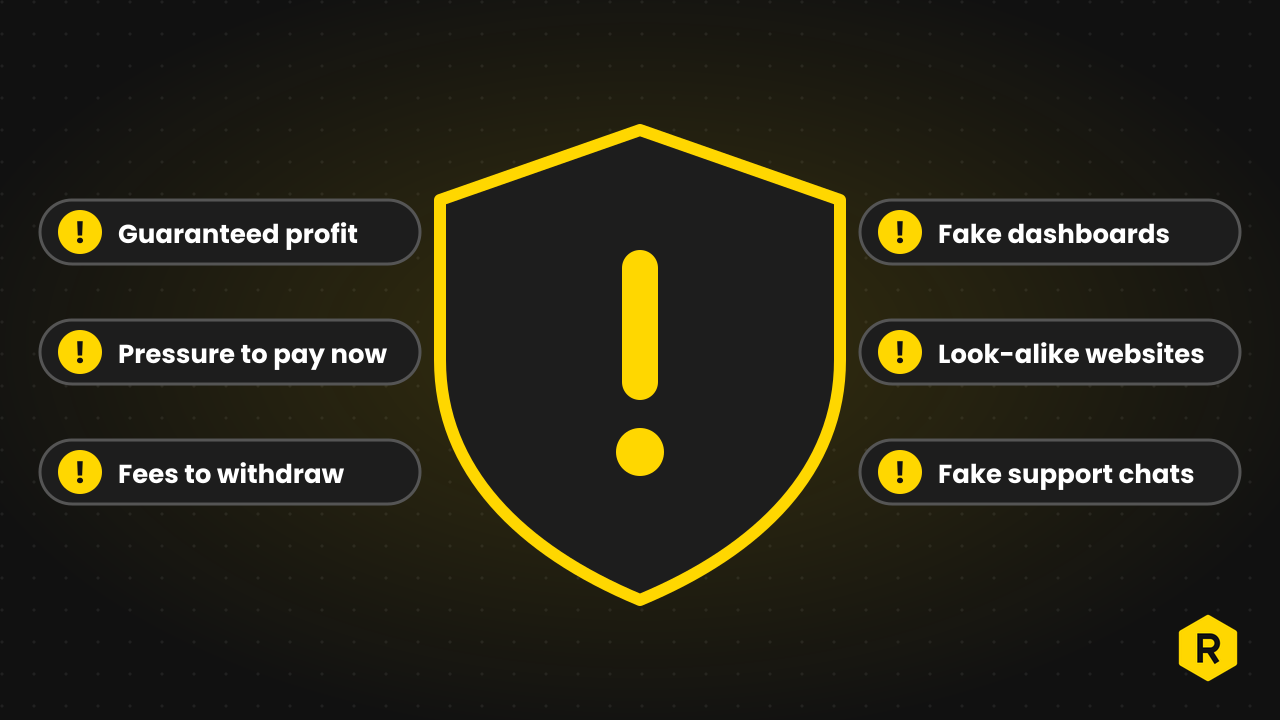
1. Guaranteed returns or “no risk.” No honest miner can guarantee income. Mining revenue moves with the Bitcoin price, difficulty and fees, as we explain in what drives profitability. The FTC says only scammers promise no risk and guaranteed high returns.
2. Payouts that look too steady. If a “mining plan” pays the same amount every month whatever the market does, ask where the money comes from. The SEC’s allegations in the case above are that payouts were not backed by real mining income.
3. Pressure to act now. Regulators list pressure to buy immediately and unsolicited offers as warning signs. A real seller can wait while you check.
4. Unlicensed sellers and hard-to-understand pitches. The SEC and CFTC advise being suspicious of jargon-heavy pitches that come with promises of outsized returns.
5. Fabricated results. Scam websites may show made-up historical returns. A dashboard full of impressive numbers is not proof.
6. Fees to get your money out. If you are asked to pay more money to withdraw what you already put in, stop. Regulators advise reporting this.
7. Contact out of the blue. Be wary of anyone who contacts you unprompted and demands payment in cryptocurrency, and of a “love interest” or new online friend who offers investment advice. The FTC calls the latter a scam.
8. Look-alike sites and fake support. Scammers copy real brands with similar web addresses and set up fake support accounts on WhatsApp and Telegram. If you reach a company through a link in a message, you cannot be sure it is the real one.
9. Celebrity endorsements. A famous face does not make an offer safe.
How to protect yourself
- Type the address yourself or use a bookmark you saved earlier. Do not follow links in unexpected messages.
- Take contact details from the official website, not from a message. For OneMiners, that is the contact page. If someone claims to be from OneMiners and you are unsure, use the support request page or the contact channels listed there.
- Pay only to details on your own order page or the official site, and never to a personal wallet someone sends you in a chat.
- Check the company with our list in how to check a mining hosting company.
- Start small, and test a withdrawal before you commit more.
- Do not rush. A deal that cannot wait a day for you to check it is not a deal worth taking.
If you think you have been scammed
- Stop sending money. Do not pay “fees” to recover funds.
- Keep records: messages, receipts, wallet addresses and web addresses.
- Report it. In the United States, report to the FTC at ReportFraud.ftc.gov, and report possible securities fraud to the SEC. Elsewhere, contact your local consumer or financial authority.
- Warn your bank or the exchange you used, as they may be able to act quickly.
Mining carries real risk even with an honest provider, and nothing here is financial advice. The aim is to make sure the risks you take are the ones you chose.
Sources and further reading
- FTC: What to know about cryptocurrency and scams
- SEC: Digital asset and "crypto" investment scams, investor alert
- SEC and CFTC: Watch out for fraudulent digital asset and "crypto" trading websites
- The Block: SEC charges Florida man and company in alleged $22 million crypto mining fraud scheme
- Bitcoin Magazine: SEC and CFTC issue investment warning on crypto scams
Written by the OneMiners team. We sell and host mining machines, so this article links to our own pages where they are relevant, and the sources above are independent. It explains how things work and is not financial advice. Mining carries risk, and prices, rates and features change, so check oneminers.com for current details.